
The statistics are no longer debatable. The prevalence of depression among adolescents and adults has surged 60% in the past decade, according to the CDC's National Health and Nutrition Examination Survey. The suicide rate among girls aged 10 to 14 tripled between 2000 and 2020. The U.S. Surgeon General has issued an unprecedented advisory on social media's impact on the mental health of youth. School counselors are overwhelmed. Parents are struggling. And the crisis isn't limited to children — adults are battling the same platforms, the same algorithms, the same erosions of mental well-being.
Niki Flemming decided to do something about it.
Not with a hashtag campaign. Not with a content filter. Not with another parental control dashboard that teenagers disable within minutes. Flemming, a Yale-trained graduate nursing student and mother of four, helped provide the architect of SYRKL — a social media platform that makes harm structurally impossible rather than algorithmically unlikely.
"Every other platform tries to moderate harm after it happens. We designed SYRKL so that the harm can't happen in the first place. You cannot cyberbully someone with emojis. You cannot groom a child through emoji-only messages. You cannot spread misinformation without words. We didn't build a filter. We changed the architecture."
— Niki Flemming
The Nurse Behind the Code
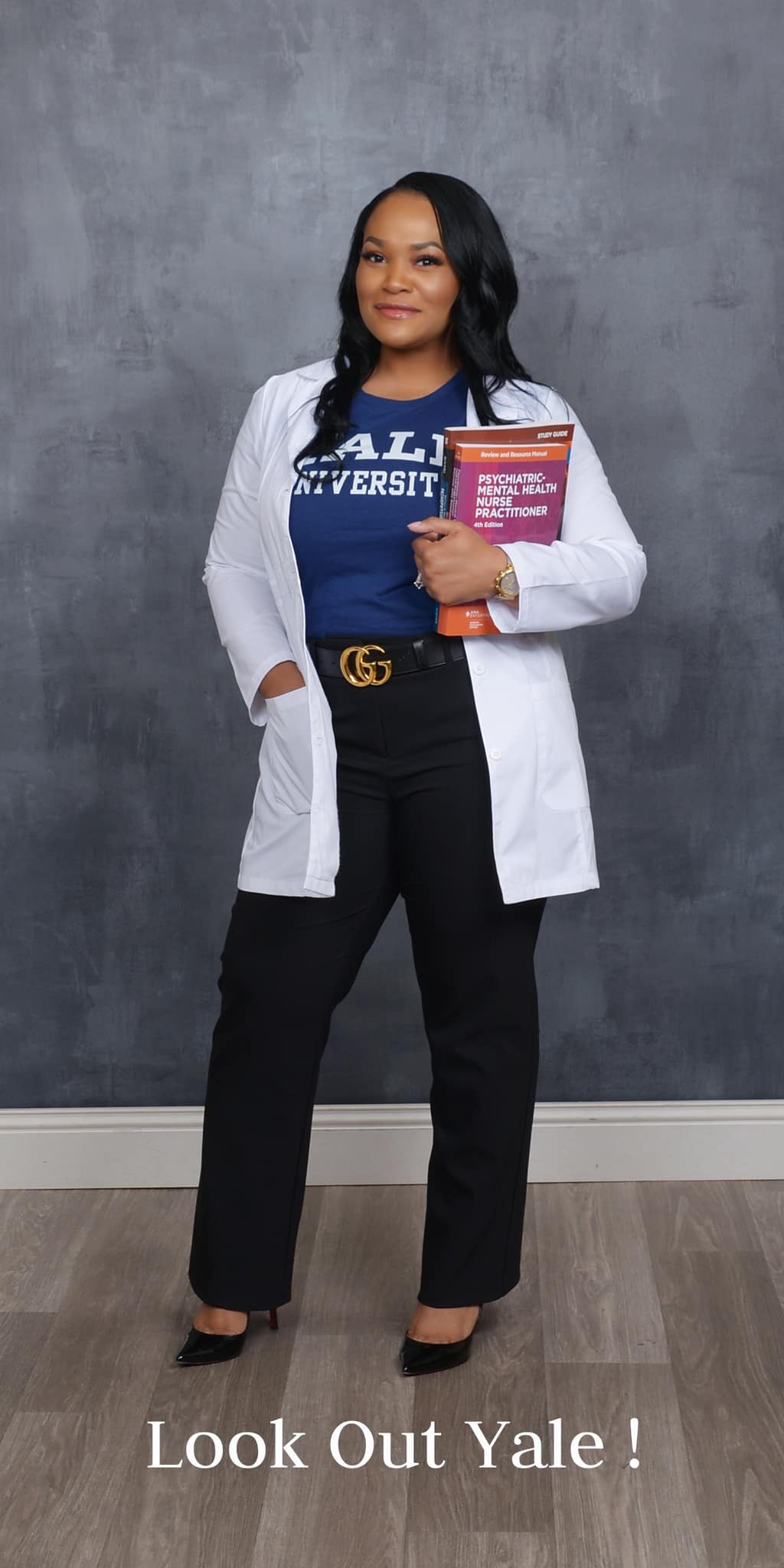
Flemming's credentials read like three separate careers compressed into one. She holds a Bachelor of Arts in English from Hunter College, where she graduated Cum Laude with departmental honors. She earned her Bachelor of Science in Nursing from Hunter's accelerated program. She completed her MBA at Grand Canyon University. And she is currently pursuing her Master of Science in Nursing at Yale University, specializing in becoming a provider in psychiatry and mental health care.
Her clinical resume spans more than 13 years and includes Labor and Delivery, NICU, PACU, surgical intra-op, telemetry, step-down care and psychiatric clinical training in her current program at Yale. She has worked at some of the largest health institutions in the nation including Texas Children's Hospital, Harris Health System, Memorial Hermann and several HCA hospitals, including the Woman's Hospital of Texas. At Ben Taub — a Level IV trauma center serving indigent and incarcerated populations — she conducted comprehensive psychological assessments and behavioral health referrals. She served on the frontlines during COVID-19, working Med/Surg Telemetry and COVID-IMU units.
"I've held the hands of mothers losing babies in the NICU. I've assessed incarcerated women who had never received a mental health screening. I've watched nurses nearly collapse from exhaustion during COVID. When I look at what social media does to mental health — not just our children's, but our own — I see the same pattern I've seen in clinical settings: preventable suffering that nobody is structurally addressing."
— Niki Flemming

What Makes SYRKL Different
SYRKL operates on a radical premise: communication without text. Every interaction on the platform — reactions, messages, captions, conversations — happens entirely through emojis. It sounds like a limitation. Flemming argues it's a structural safeguard.
"The primary vector for cyberbullying is text," Flemming explains. "Remove text, you remove the weapon. This isn't a gimmick — it's a structural intervention grounded in the same harm reduction principles I use in nursing practice. We didn't build better content moderation. We made the harmful content architecturally impossible."
The platform's feature sets map directly to well-being frameworks. SYRKL's Daily Pulse — a daily mood check-in where users select one of 16 unique emotional states — mirrors the standardized mood monitoring that are used as baseline practice in well-being research for depression, anxiety, and bipolar screening. Each pulse carries a distinct color that displays as an aura ring around the user's avatar, allowing family members and close friends to see emotional shifts in real time without interrogation.
"In nursing, visual assessment is the first step of every encounter. SYRKL puts one's emotional state on display without requiring one to verbalize it. A parent glances at their child's profile and sees the aura ring turned crimson three days running. A husband notices his wife's pulse has shifted from 'peaceful' to 'anxious' all week. That's a conversation starter grounded in data, not interrogation."
— Niki Flemming
Trust Circles — the platform's controlled sharing groups — mirror the bounded safety of group therapy. Vibe Rooms, which organize content by emotion, map to the affect categories used in dialectical behavior therapy (DBT) and emotional regulation frameworks. The fact that strangers cannot send direct messages eliminates the primary mechanism for online predatory grooming.
"Every feature maps to a safety principle I use with patients," Flemming says. "This isn't social media with safety features bolted on. It's mental health infrastructure that happens to look like social media."
It Started With Her Kids. It Grew Into Something Bigger.
For Flemming, the stakes began at home. She and her husband, Dawayne — SYRKL's co-founder and the app's technical architect — are raising four children in a world where the average child receives their first smartphone at age 11 and spends more than seven hours daily on screens.
"We watched our kids on platforms like Roblox where strangers could say anything to them," Flemming recalls. "As a nurse, I know what chronic exposure to hostility does to a developing brain. As a mother, I couldn't just study the problem. I had to build the solution."
But as SYRKL took shape, the Flemmings realized the problem they were solving wasn't confined to childhood. Adults are drowning in the same toxic mechanics — doomscrolling, comparison culture, algorithmic outrage. Parents are anxious. Marriages are strained by the same attention economy that harms their children. The mental health crisis isn't a youth problem. It's a human problem.
"We built SYRKL to protect our kids. But the more we built, the more we realized that adults needed this just as badly. A mother who spends two hours doomscrolling before bed isn't in a better mental state than her teenager. We're all in this crisis together. SYRKL is a safe space for everyone."
— Niki Flemming
Flemming is also the author of 52 Verses to Purpose, a faith-centered devotional that has resonated with readers seeking spiritual grounding in uncertain times. Her work as a region leader of the prayer partner ministry at Lakewood Church in Houston — one of the largest congregations in the country — gives her direct access to a community of families who share her concerns about the digital landscape they're all navigating.
"My faith, my years at the bedside, and my role as a mother are not separate things," Flemming says. "They converge in everything I do. SYRKL exists because I believe we have a responsibility to protect the emotional and spiritual well-being of our families — not just warn about the dangers, but actually build something better."
The Crisis By The Numbers
SYRKL enters a market defined by urgency. Jonathan Haidt's bestselling book The Anxious Generation has galvanized a national movement to rethink our relationship with technology. Forty-two state attorneys general have filed lawsuits against Meta. Schools are banning smartphones. The Surgeon General has called for warning labels on social media platforms.
But bans and warnings are blunt instruments. They address the symptom, not the mechanism.
"You can't tell a generation raised on connectivity to simply disconnect," Flemming argues. "And you can't tell adults to just put down their phones when every part of modern life runs through them. You need a better system — one that gives people the social connection they need without the mechanisms that cause harm. That's what SYRKL is. It's the intervention, not the warning label."
What's Next For SYRKL
SYRKL is currently available on the Apple App Store with an Android launch imminent. The platform has attracted early adoption from families who see it as the first social media tool they can use together — across generations and without reservation.
Flemming is simultaneously completing her Yale graduate nursing program and building SYRKL's advisory role — a schedule that would be implausible for most people but is, by her own account, precisely what her career has prepared her for.
"Thirteen years of 12-hour shifts, twelve hours of hospital codes, and COVID units taught me something about endurance," Flemming says with a quiet confidence that suggests she has said far harder things to far more skeptical audiences. "Building a company while finishing Yale and raising four children is not easy. But I've never chosen easy. I chose necessary."
In an era where the tech industry's response to the mental health crisis has been largely cosmetic — age gates that don't work, content filters that lag behind creators, and parental controls that assume parents have time to monitor every interaction — Flemming offers something different: a nurse's precision applied to a designer's canvas. SYRKL doesn't ask people to be safer on social media. It makes social media safer by design.
"Our mental health is not a content moderation problem. It's a design problem. We fixed the design."
— Niki Flemming